Feeds:
Posts
Comments

In his post “Future City: Portland & Networked Urban Sustainability,” Alex Aylett provides a look “at some of the hits and misses of climate change policy in Portland (OR).” He sought to provide more than “just a summary of one city’s programs” to identify evidence of what he sees as “an important shift in the way cities are pursuing sustainability.”

Aylett finds that many cities in throughout the world are entering a new era of implementing sustainable practices, an era in which “retrofitting City Hall is nice, but the real game revolves around how we plan and travel through our cities, how we build and run our buildings, and how we make and use energy.” This “new phase of urban sustainability” is one in which the low-hanging fruit has been harvested (so to speak) and “cities are being pushed to tackle the really tough issues.”

Portland, according to Aylett, is “one of a handful of American cities that is really embracing the challenges of networked sustainability,” as evidenced by a number of organizations and projects in the area, including: Clean Energy Works Portland (CEWP); Green Building initiatives to achieve LEED certifications; and ecodistricts & the Portland Sustainability Institute (PoSI).

Readers interested in learning more about Portland or modern urban environments broadly are encouraged to read Aylett’s blog “openalex: cities & sustainability: reinventing the good life,” navigate to his article cited above, and to peruse as well his the other Portland-specific articles he has written, including:

I just learned about a book of relevance to the SHP that is soon to be released:

This book is “a collaborative exploration of how small businesses can effectively and efficiently shift toward sustainability and thrive.” This exploration involves “Fifty-one small-business people from Portland” who “share their experiences with implementing sustainable practices in their companies.” The collaborative effort to create the book involved crowdsourcing. As the book’s website identifies:

    The difference between crowdsourcing and ordinary outsourcing is that a task or problem is outsourced to an undefined public rather than a specific other body. The difference between crowdsourcing and open source is that open source production is a cooperative activity initiated and voluntarily undertaken by members of the public. In crowdsourcing the activity is initiated by a client and the work may be undertaken on an individual, as well as a group, basis.

Mercy Corps Northwest is hosting a free-of-charge book release party for Portland Bottom Line on Wednesday, November 10, from 5-8 pm (with a program at 6) at Mercy Corps HQ, 45 SW Ankeny St., Portland.

The book’s website provides some sample chapters and a forum for other regional business professionals to share their stories.

—-
** Updated soon after posting, with information from the editors. Thanks, editors!

Portland area regional map, from Institute of Portland Metropolitan Studies, http://www.pdx.edu/ims/regional-map

A critical first step in any study of regional sustainability is determining what has already been done. This post will be the first on this website to begin to gather such links. The information below complements the “Links of Interest” on this website, and also provides some insight into questions raised in the SHP post “On the history of sustainability in the Pac NW.”

This post highlights the work of the Institute of Portland Metropolitan Studies at Portland State University, and The Diggable City PSU Master of Urban and Regional Planning workshop.

Continue Reading »

Students for Leadership in Ecology, Culture and Learning will be hosting the second annual PSU Sustainability Education Week, Nov. 6-12, 2010.

Students this quarter have been invited to attend one or more of the events and write-up a blog post about it for the SHP website, and anyone else interested in providing feedback, links, or other items for discussion are also invited to post a comment below.

Community partners for the event include:

and PSU campus partners include:

[The post below is an extra-credit assignment written by B. Bazsó, with notes by James V. Hillegas]

Multnomah County Office of Sustainability together with the Green Team has started the Multnomah County Sustainability Film Series, with films and panel discussions at Bagdad Theatre on a quarterly basis.

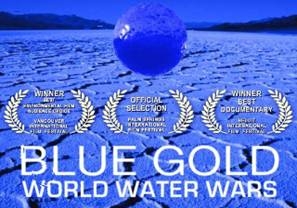
The films, or rather documentaries, are all related to topics of concern to sustainable development. The event I attended on 17 October 2010 focused on the issue of water supply; locally, globally, sustainably. The film shown was “Blue Gold: World Water Wars” (2008) by Sam Bozzo , narrated by Malcolm McDowell, is an informative work of art that, which for the most part, paints a dire picture of our fresh water supply—present and future. As any work of art, including documentaries, Blue Gold is clearly geared toward raising public awareness of the economic and political facts behind the current fresh water supply situation and getting private persons in motion to defend against corporate robbery of this precious natural resource.

Continue Reading »

[The post below was written by students Ian C. and Brian H., with notes by James V. Hillegas]

This week we looked at two articles that are critical of sustainability, “The Roots of Sustainability” by Glenn M. Ricketts, and “Is Sustainability Sustainable?” by Daniel Bonevac.[1] Both authors take strong anti-sustainability stances.

Ricketts mostly criticizes sustainability as a political movement. He accuses sustainability proponents of being dogmatic, and spreading their beliefs in an evangelical manner, calling it a secular religion. According to Ricketts, a culture exist within academia that is hostile to any critique of sustainability. Though he does little in the way of actually offering critiques of the principles of sustainability themselves, except to point out that the more dire predictions of previous decades have not yet come to pass. He focuses on presenting a sinister-sounding narrative about the people and social trends supporting sustainability rather than engaging with the ideas behind it.

Continue Reading »

[This post written by Jonathan F., Paul Quiring, Danny S., and Angelo S.]

We were lucky enough on Oct. 14 to have Dianne Riley from the CLF come to our class to introduce us to The Equity Atlas and she opened up a lot of ideas about what needs to be worked on in our community to improve sustainable living. One of the most overlooked aspects of sustainability is equity. While the majority of people working in the field of sustainability focus on the environmental aspect, equity is something that needs more attention in order for future generations to be sustainable too.

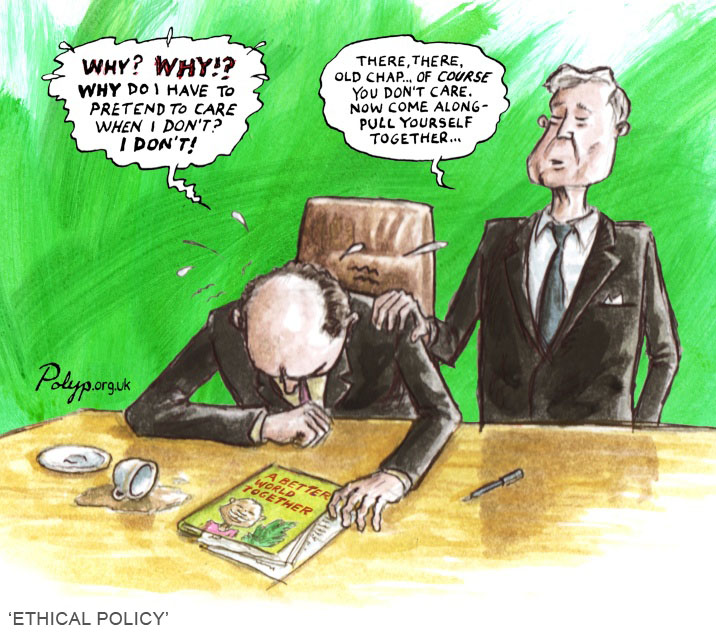
The idea of redefining the indicators of success plays a large role in developing social sustainability from the standpoint of corporate responsibility. There are many contrasts and difficulties that are faced when striving for both economic and social sustainability among corporations and business. This dilemma is largely due to the fact that economic success and social responsibility often times do not go hand in hand. Because the measure of success in the corporate world is mostly profit driven, social responsibility takes a back seat to making money. This is where the indicators of success could use change, or at least a tweaking. Society as a whole can demand corporate accountability and social responsibility, because as the consumers we have the ultimate say. If consumers demanded contributions to the development of social sustainability from corporations, and didn’t consume products from these corporations if they did not comply, the indicators of success would surely change and the reality of economic and social sustainability going hand in hand may emerge.

Cartoon from filipspagnoli.wordpress.com.


Continue Reading »

This quarter, I asked the students to compose blog posts highlighting what they felt to be the most important elements from their Reading Response 1 and 2 assignments.

As part of Reading Response 2, I asked students to pair an article I had selected with something from their own discipline or area of interest that addressed the broad scope and meaning of sustainability in this discipline. Below is a list of sources that students found themselves to complement the articles I assigned.

Continue Reading »

For the Fall 2010 academic quarter, we will be looking at sustainability in the Portland area (broadly defined) through the lens of equity.

I’ve facilitated these courses since the Winter 2009 quarter, and I’ve consistently found that the majority of students don’t immediately think of equity issues when considering sustainability; most of them readily think of economic and ecological topics, but not necessarily equity, social justice, etc. That students tend to come to class with this perspective suggests an opportunity to bring this dynamic to the forefront for educational purposes. This quarter, then, I sought to address this issue directly and engage my students more explicitly with one of the Brundtland Commission’s three co-equal pillars: equity.

Continue Reading »

[This post written by J. Orr, B. Green, & B. Bazsó]

As we try and come up with our own definition of sustainability, we have difficulty fitting everything involved into a single sentence or two. We believe that our idea of sustainability is in response to the idea that current practices in social equity, economics, and the ecosystem cannot continue. Having said that, we believe that sustainable practices are the ones that make an effort to have the lowest possible negative impact on all three areas.

Continue Reading »